
Digital Wallet Development
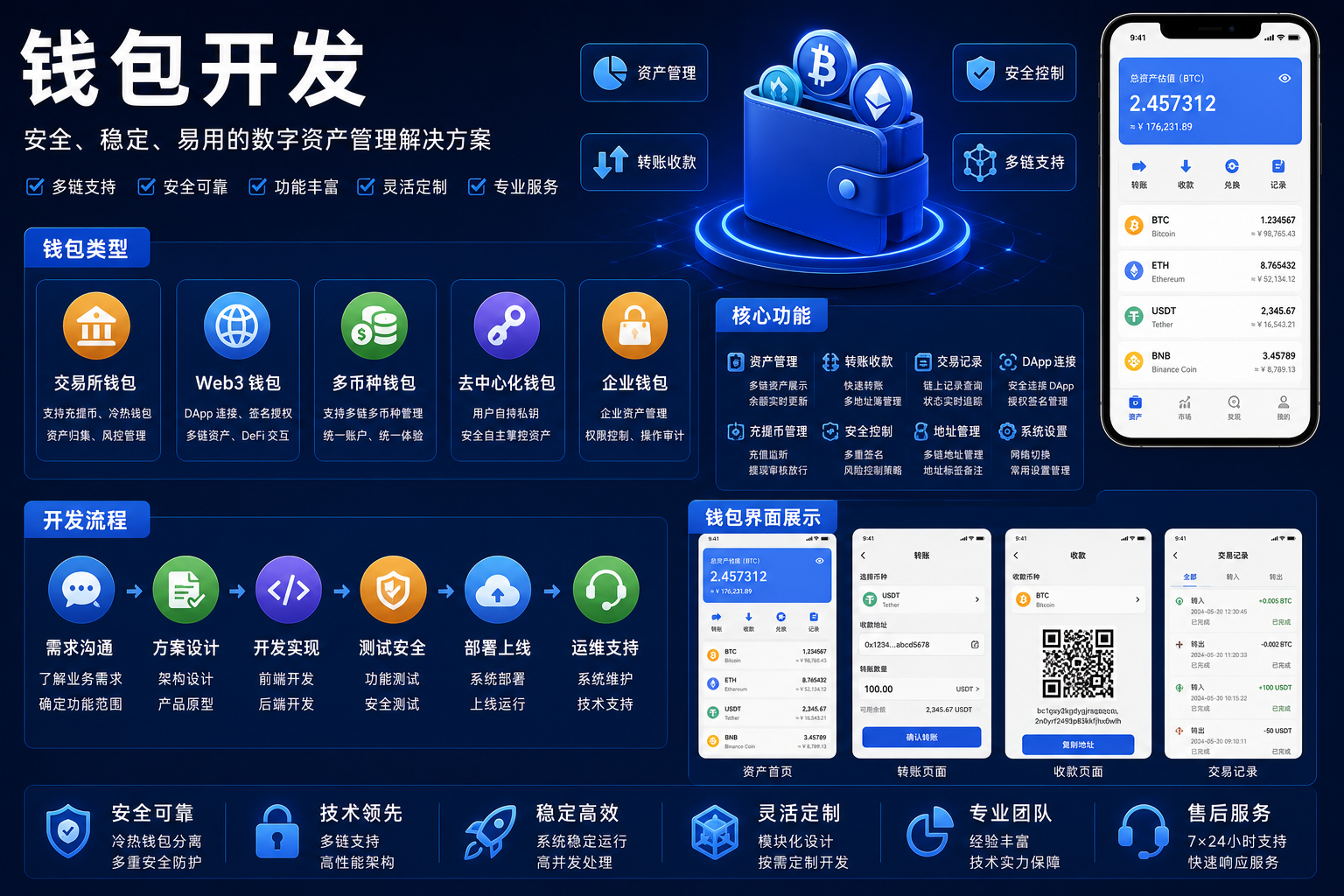
Wallet Development
HK DragonChain provides digital wallet development, exchange wallet development, Web3 wallet development, multi-currency wallet development, decentralized wallet development, hot/cold wallet architecture, on-chain asset management, deposit and withdrawal systems, wallet admin panels, and enterprise-grade wallet system customization services. Based on client business scenarios, asset types, security requirements, and operational models, we offer end-to-end wallet development solutions from requirements analysis, system architecture, wallet APIs, on-chain integration, risk control admin, to deployment and maintenance.
What Is Wallet Development
Wallet development is a critical foundational module in blockchain system construction, primarily used for managing on-chain addresses, digital assets, transfer records, authorization signatures, deposit/withdrawal processes, and user asset data. A complete wallet system is not simply about displaying balances; it requires simultaneous consideration of address generation, asset aggregation, on-chain queries, transaction broadcasting, private key management, permission controls, admin review, risk control rules, and long-term operational security.
For exchanges, DAPP platforms, NFT systems, digital asset platforms, Web3 applications, and enterprise on-chain management systems, the wallet system directly impacts user experience and asset security. If the wallet development architecture is unclear, later stages often encounter issues such as deposit/withdrawal anomalies, inaccurate asset synchronization, unstable APIs, chaotic review processes, and unclear admin permissions. Therefore, enterprises need to plan wallet systems from four perspectives: security, stability, extensibility, and maintainability.
In the wallet development process, HK DragonChain selects appropriate wallet solutions based on project type. Exchange platforms typically require hot/cold wallets, deposit/withdrawal reviews, asset aggregation, and risk control admin panels. Web3 projects typically require wallet connections, signature authorizations, multi-chain asset display, and DAPP interactions. Internal enterprise systems may place greater emphasis on permission management, asset analytics, operation records, and security audits. Different business scenarios require different wallet structures and cannot simply apply the same template.
Which Projects Are Suitable for Wallet Development
Wallet systems are suitable for projects that need to manage digital assets, on-chain addresses, transaction records, user accounts, and on-chain interactions. Whether centralized platforms or decentralized applications, any project involving on-chain asset display, transfers, authorizations, signatures, deposits/withdrawals, NFT management, or DAPP connections requires stable and reliable wallet functionality.
Exchange Wallet
Suitable for futures exchanges, spot trading platforms, OTC platforms, and digital asset trading systems, supporting hot/cold wallets, deposit/withdrawal reviews, address allocation, asset aggregation, and admin risk control.
Web3 Wallet
Suitable for DAPP applications, NFT platforms, on-chain asset applications, and decentralized projects, supporting wallet connections, signature authorizations, multi-chain asset display, and on-chain interactions.
Multi-Currency Wallet
Suitable for platforms that need to integrate multiple chains, multiple assets, multiple tokens, and multiple account types, supporting asset balance inquiries, transfer records, deposits/withdrawals, and asset analytics.
Decentralized Wallet
Suitable for non-custodial wallets, on-chain asset management, DAPP entry points, and projects with user-controlled assets, supporting mnemonics, private keys, signatures, authorizations, and multi-chain management.
HK DragonChain Wallet Development Services
HK DragonChain provides complete wallet system development services, covering account systems, on-chain addresses, asset queries, deposit/withdrawal systems, transaction broadcasting, wallet APIs, smart contract interactions, admin panels, permission controls, and security risk control. We plan architectures based on platform operational requirements and asset security needs, ensuring wallet systems are not only functional but also stable for long-term operation.
1. Exchange Wallet Development
Exchange wallets require particular focus on asset security, deposit/withdrawal efficiency, and admin management. The system can support user deposit address generation, deposit confirmation detection, withdrawal requests, manual review, automated review, asset aggregation, hot/cold wallet separation, abnormal withdrawal alerts, operation logs, and admin asset analytics. For digital asset trading platforms, the exchange wallet must work in coordination with account systems, matching systems, risk control systems, and financial systems.
2. Web3 Wallet Development
Web3 wallets place greater emphasis on on-chain interactions and user authorization experience. The system can support wallet connections, address binding, on-chain signatures, asset reading, transaction confirmations, DAPP authorizations, contract calls, and multi-chain asset display. Web3 wallets typically serve as DAPP entry points, allowing users to complete login, authorization, transactions, NFT viewing, on-chain operations, and asset management through the wallet.
3. Multi-Currency Wallet Development
Multi-currency wallets are suitable for platforms that need to integrate multiple digital assets. The system can support unified display of different chain assets, token assets, mainnet coins, contract tokens, NFT assets, and platform internal assets. HK DragonChain can design asset lists, balance inquiries, deposit addresses, withdrawal rules, fee settings, transaction records, and admin asset analytics based on project requirements.
4. Decentralized Wallet Development
Decentralized wallets typically allow users to control their own private keys or mnemonics, with the platform not directly托管 user assets. The system can support mnemonic generation, private key import, address management, on-chain signatures, transaction broadcasting, DAPP connections, multi-chain switching, and asset display. Decentralized wallet development requires particular attention to security prompts, key protection, user operation flows, and risk warnings.
5. Wallet Admin Panel System
The wallet admin panel is an important tool for platform operations management. The system can support user asset queries, deposit records, withdrawal reviews, asset aggregation, wallet address management, exception records, fee configuration, node status, operation logs, permission allocation, and data reports. Through the admin panel, enterprises can more clearly monitor wallet operational status and asset flow.
6. Wallet APIs and On-Chain Integration
Wallet systems typically need to interface with public chain nodes, block explorers, DAPP platforms, exchange systems, NFT platforms, admin systems, and third-party services. HK DragonChain can provide RPC interfaces, APIs, address generation interfaces, balance inquiry interfaces, transaction broadcast interfaces, deposit monitoring interfaces, and withdrawal callback interfaces, ensuring stable connections between business systems and on-chain services.
Core Functional Modules of Wallet Systems
A mature wallet system needs to cover user-facing, on-chain, admin, and risk control endpoints. HK DragonChain decomposes functional modules based on different project requirements, ensuring clear system structure, defined permissions, secure control, and convenient future extensibility.
- Account System: Supports user accounts, wallet addresses, identity binding, role permissions, login security, and operation records.
- Address Generation: Supports on-chain address generation, address allocation, address binding, address status management, and multi-chain address extension.
- Asset Queries: Supports balance display, asset details, transaction records, deposit records, withdrawal records, and on-chain status synchronization.
- Deposit System: Supports deposit monitoring, confirmation detection, confirmation count configuration, deposit records, exception handling, and notification.
- Withdrawal System: Supports withdrawal requests, fee calculation, manual review, automated review, transaction broadcasting, and result callbacks.
- Hot/Cold Wallets: Supports hot wallet operations, cold wallet storage, asset aggregation, risk isolation, and security policy configuration.
- Signature Authorization: Supports on-chain signatures, DAPP authorizations, transaction confirmations, contract interactions, and user authorization records.
- Admin Panel: Supports asset analytics, user management, withdrawal reviews, address management, permission configuration, and log tracking.
- Security Risk Control: Supports abnormal withdrawal alerts, limit controls, permission isolation, IP logging, operation logs, and risk reviews.
Wallet Development Process
Wallet development involves asset security and on-chain interactions, so the development process must be rigorous. HK DragonChain clarifies business types, chain requirements, asset scope, deposit/withdrawal rules, security policies, and admin permissions before beginning system development and testing.
Requirements Analysis
Understand project type, supported chains, asset types, user roles, deposit/withdrawal processes, wallet models, and security requirements.
Architecture Planning
Plan account systems, address rules, node interfaces, asset models, hot/cold wallets, admin review processes, and risk control strategies.
Feature Design
Design user wallet pages, asset detail pages, deposit/withdrawal pages, admin management pages, review workflows, and data analytics pages.
System Development
Develop wallet APIs, address generation, asset queries, deposit/withdrawal systems, signature authorizations, admin panels, and security risk control features.
Testing & Deployment
Conduct deposit testing, withdrawal testing, API testing, node testing, permission testing, exception testing, and server deployment.
Launch & Maintenance
Provide post-launch node monitoring, issue troubleshooting, asset data reconciliation, version upgrades, feature expansion, and long-term technical support.
Comparison of Different Wallet System Types
Different types of wallet systems suit different business scenarios. Before developing a wallet, enterprises need to clarify whether they are building a trading platform, Web3 application, DAPP entry point, enterprise asset management system, or decentralized wallet product. Functional priorities and security strategies differ across these directions.
| Wallet Type | Applicable Scenarios | Core Features |
|---|---|---|
| Exchange Wallet | Exchanges, OTC platforms, futures platforms, spot trading systems | Deposits, withdrawals, review, aggregation, hot/cold wallets, asset risk control |
| Web3 Wallet | DAPPs, NFT platforms, on-chain applications, decentralized services | Wallet connection, signature authorization, multi-chain assets, contract interactions |
| Multi-Currency Wallet | Digital asset platforms, multi-chain asset management, enterprise wallets | Multi-chain integration, balance inquiries, asset display, transaction records |
| Decentralized Wallet | Non-custodial wallets, on-chain asset management, DAPP entry points | Mnemonics, private keys, address management, on-chain signatures, autonomous asset management |
| Enterprise Custodial Wallet | Enterprise asset management, platform internal assets, business system integration | Permission management, asset analytics, approval workflows, operation logs |
Key Considerations in Wallet Development
Security is the most important aspect of wallet development. Whether exchange wallets or Web3 wallets, attention must be paid to private key management, address generation, transaction signatures, API permissions, admin review, and asset risk control. For custodial wallets, platforms need to design hot/cold wallet architecture, withdrawal review processes, limit controls, and exception alerts. For non-custodial wallets, clear mnemonic prompts, private key protection, user backup guidance, and risk warnings are essential.
Second, wallet systems must ensure asset data accuracy. Deposit confirmation detection, withdrawal status callbacks, balance synchronization, on-chain transaction confirmation counts, and node stability all affect user experience. If node APIs are unstable, it may cause delayed balance display, deposits not being credited, or abnormal withdrawal statuses. Therefore, wallet systems need comprehensive monitoring mechanisms, exception handling, and data reconciliation capabilities.
Additionally, admin permissions must be clearly defined. Functions involving asset operations should not be freely accessible to all administrators. Different roles, permissions, operation logs, and review workflows should be established. HK DragonChain plans permission systems and risk control mechanisms based on actual project requirements in wallet development, helping clients enhance system security.
Why Choose HK DragonChain
HK DragonChain, headquartered in Shenzhen's Longhua District, specializes in blockchain development, wallet systems, DAPP applications, smart contracts, exchange systems, NFT platforms, anti-counterfeit traceability, digital copyright, and enterprise software customization. In wallet development, we focus not only on page features but also on asset security, API stability, admin management, and post-launch maintenance.
For exchange projects, we provide hot/cold wallets, deposit/withdrawal systems, asset aggregation, withdrawal review, and risk control admin panels. For Web3 projects, we provide wallet connection, signature authorization, DAPP interaction, and multi-chain asset display. For enterprise platforms, we provide asset management, permission approval, operation records, and business system API integration.
We insist on planning wallet systems based on actual business needs, avoiding盲目 feature stacking. Clear wallet architecture, stable on-chain APIs, strict permission management, reliable risk control processes, and ongoing technical maintenance are the keys to long-term stable wallet system operation.
Related Blockchain Services
Wallet development is typically used in conjunction with exchange systems, DAPP development, smart contract development, NFT systems, digital copyright systems, anti-counterfeit traceability systems, and public/mainnet chain development. If you are planning a digital wallet, Web3 wallet, exchange wallet, or multi-currency asset management platform, you can continue to learn about HK DragonChain's blockchain development services. We will provide a more implementable wallet development solution based on project type and business processes.
Wallet Development FAQs
What is the difference between exchange wallets and Web3 wallets?
Exchange wallets emphasize platform custody, deposit/withdrawal review, asset aggregation, and admin risk control. Web3 wallets emphasize user authorization, on-chain signatures, DAPP connections, and decentralized asset interactions.
Can a wallet system support multiple currencies?
Yes. Wallet systems can integrate multiple chains, multiple mainnet coins, multiple contract tokens, and NFT assets based on project requirements, supporting balance inquiries, transaction records, and asset display.
Does wallet development require blockchain node integration?
Typically yes. Wallet systems need to use nodes or APIs to complete address generation, balance inquiries, transaction broadcasting, deposit monitoring, and transaction record synchronization.
Can wallet systems be expanded after launch?
Yes. As long as the initial architecture is reasonable, later expansions can include multi-chain assets, NFT management, DAPP connections, exchange APIs, risk control admin, and more enterprise asset management features.
Get a Wallet Development Solution
If you are planning digital wallet development, exchange wallet, Web3 wallet, multi-currency wallet, decentralized wallet, hot/cold wallet system, deposit/withdrawal system, or enterprise asset management platform, you are welcome to discuss your project requirements with HK DragonChain. We will provide a more implementable wallet development solution based on your business scenarios, asset types, security requirements, and launch plans.